The Centre for Applied Ethics and Philosophy
The Centre for Applied Ethics and Philosophy (CAEP) was established to maintain and enhance the University’s capacity for teaching, research, scholarship and community outreach in philosophy and ethics.
We work with people in education, government, industry and the community sector to stimulate discussion: clarifying ethical issues and seeking creative solutions for practical problems. Our goal is to foster ethical decision-making and to develop, maintain and enhance capacity for teaching expertise, research and scholarship in ethics and philosophy.
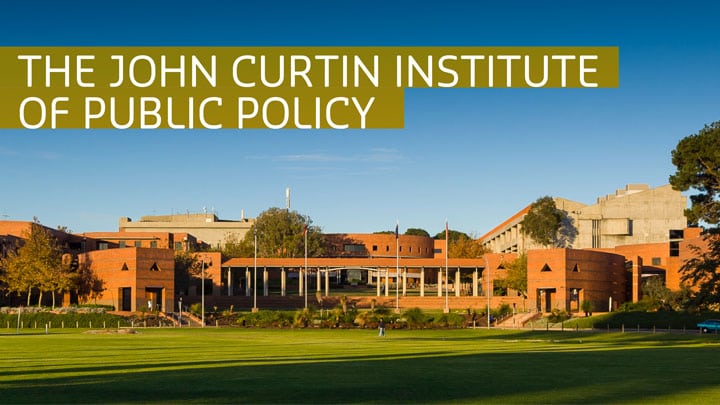
The Centre was established in 2004 through grants from the teaching faculties and the Vice-Chancellor. It now works closely with the John Curtin Institute of Public Policy and the Curtin Health Innovation Research Institute (CHIRI) and as a result can bring together teams of highly-experienced specialists for specific projects.
The core objectives of the Centre are to:
-
Stimulate dialogue on ethical and philosophical matters;
-
Offer courses and undertake research in applied ethics and philosophy;
-
Offer consultancy and advisory services that address specific ethical and philosophical issues; and
-
Develop productive partnerships.
Staff
Associate Professor Stephan Millett BEcon, BA(Hons), PhD, MACE (Director)
Stephan is foundation Director of the Centre, Chair of the Human Research Ethics Committee at Curtin University and is the Adviser on Research Integrity for the University. He is a former newspaper editor, journalism academic and school teacher. His PhD in Philosophy from Murdoch University is for work on Aristotle and environmental ethics under supervisor Jeff Malpas.
Stephan is known for his work on philosophy and ethics in schools. He pioneered the introduction of philosophy into schools in Western Australia (building on the work of Felicity Haynes, in particular) and was instrumental in having the Philosophy and Ethics course included in the Western Australian Certificate of Education (WACE). He was the writer of the Year 11 and 12 WACE course in Philosophy and Ethics and has published three textbooks for the course.
As founder of the Curtin University Centre for Applied Ethics and Philosophy he has, in the past several years, increasingly specialised in health ethics, research ethics and the ethics and values for large organisations, including state government departments and instrumentalities. His applied ethics interests include: ethics pedagogy; media ethics; environmental ethics; health ethics and clinical and research ethics. Philosophical ethics interests include ethics, philosophy of technology and metaphysics.
Dr Alan Tapper (Senior Research Fellow)
Alan was formerly Head of the Philosophy program at Edith Cowan University in Perth. He was chair of the Western Australian Curriculum Council reference group for the Year 11 and 12 course of study in Philosophy and Ethics and has co-written with Stephan three textbooks for the course. He was appointed Senior Research Fellow with the Centre in 2008. He is currently working on an anthology based on the work of Julius Kovesi.
Sheila Flanagan (Administrative Officer and Researcher)
Sheila was foundation Chair of the Board of Governors for Geraldton Grammar School, is a trained teacher and has worked with Stephan on trial studies into the impact of teaching philosophy to middle school students. She works for the Centre part-time.
Research students
Kate Vickers (PhD research “Disinterested Art: Kant’s Contribution to an aesthetics of tele-visual art”)
Funding
Centre staff are funded by the Office of Research and Development and from 2009 also by the Faculty of Health Sciences at Curtin. The basic cost of running the centre is met by paid consultancy and funded research. The Centre welcomes the opportunity to form partnerships with public, private and community sectors for work in education, research and consultancy in any area of applied ethics and philosophy.
Philosophy and Ethics
Philosophy, at its simplest, seeks answers to the questions: What is there? How do we know? and What ought we do? This last question is one asked in Ethics, which also asks us to think about questions such as:
- "why should I do this?"
- "how should I live?"
- "what values are important here?"
It deals with questions arising from our capacity to affect others – a capacity that is inherent in every human interaction and which argues strongly for ethics being centrally important in our public and our private lives.
The values we apply and the behaviours we exhibit are not simply 'natural', they come to us through our capacity to reflect on our choices and to choose carefully how to act. This applies to public, private and community organisations as much as to individuals. With this in mind, the Centre aims to foster a spirit of ethical reflection so that ethical decision-making increasingly becomes a normal part of our lives. We distinguish between philosophy and ethics because ethics need not be addressed through philosophy, and because philosophical methods are valuable tools for identifying and resolving problems that do not necessarily have an overt ethical element.
Recent publications
Books
Millett, S. & Tapper, A. (2008). Philosophy and Ethics: A resource for units 1A and 1B. Perth: Impact Publishing. [link]
Millett, S. & Tapper, A. (2008). Philosophy and Ethics: A resource for units 3A and 3B. Perth: Impact Publishing. [link]
Millett, S. & Tapper, A. (2007). Philosophy and Ethics: A resource for units 2A and 2B. Perth: Impact Publishing. [link]
Book chapters
Millett, S. (2008). “The study of ethics”. In D. McDermid (Ed.), Ethics in ICT: an Australian perspective. Frenchs Forest, NSW: Pearson Education.
Millett, S. (2008). “The state, the soul, virtue and potential: Aristotle on education.” In C. Tan (Ed.), Philosophical Reflections for Educators, (pp. 21–30). Singapore: Cengage Learning.
Refereed journal articles
Millett, S. (2008). “Where do our obligations to animals come from and how are they changing: ethics meets the law”. Proceedings of the AustralianVeterinary Association Annual Conference. Perth. 2008, May.
Millett, S. (2008). “Coming in from the margins: teaching philosophy in Australian schools”. Thinking. 19, 1, Spring.
Millett, S. (2007). “Caring about being ethical in the public service”. Australian Journal of Professional and Applied Ethics. Vol. 9. No. 2. September.
Millett, S. and Flanagan, S. (2007). “Philosophy in the talented Year 8 classroom: improving thinking (and a whole lot more) through philosophical inquiry”. TalentEd. Vol 25, No.1. ISSN 0815-8150
Other refereed
Millett, S. (2007). “An emblematic and instructive example: The Australian appropriation of P4C”. UNESCO (2007). Philosophy, a School of Freedom. (p.26). Paris: UNESCO Publishing. ISBN 978-92-3-104070-2.
Contact Details
The Centre for Applied Ethics and Philosophy
c/- The John Curtin Institute of Public Public Policy
Curtin University of Technology
GPO Box U1987
Perth WA 6845
Australia
Telephone: + 61 8 9266 1111
Fax: + 61 8 9266 3658
Email: ethicscentre@curtin.edu.au